AI Agents for Logistics
How freight forwarders and customs brokers are using specialized AI agents to automate documents, classification, and entry prep—without replacing their TMS or their experts
Harish Deivanayagam
•2 days ago
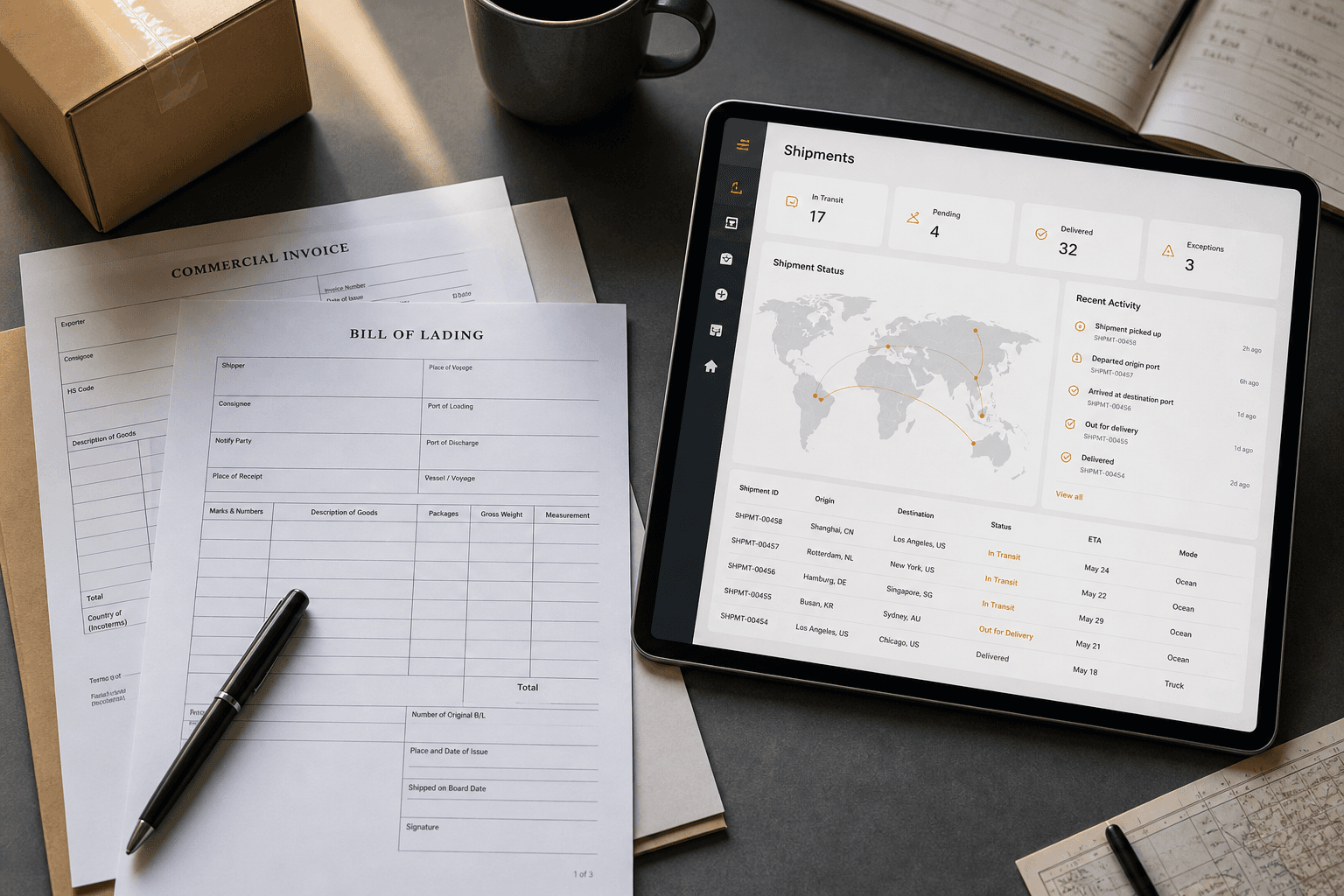
Freight forwarders and customs brokers still run on the same document stack the industry has used for decades: Commercial Invoices, Packing Lists, Bills of Lading, warehouse receipts, and customs forms. What changed is volume and speed. More SKUs per shipment, tighter cutoffs, and less tolerance for re-keying the same data into a TMS, a broker portal, and a spreadsheet.
AI agents for logistics are not another generic chatbot bolted onto your inbox. They are specialized workers that extract data, classify tariff codes, validate documents against each other, and prepare lodgement-ready files—while your licensed brokers and ops leads stay on the exceptions that need judgment.
Why logistics is ready for agentic AI
Across platforms like Reform, Clear.ai, Raft, and Augment, a consistent pattern has emerged:
- Keep the systems you trust. AI sits beside CargoWise, Magaya, Outlook, QuickBooks, and in-house tools—not instead of them.
- Encode SOPs, don’t invent new ones. The best agents follow how your team already quotes, consolidates, classifies, and files.
- Human-in-the-loop by design. Operators review mismatches and low-confidence decisions; routine rows move automatically.
- Vertical depth beats horizontal glue. Freight and customs workflows are too nuanced for one-size-fits-all RPA.
The result is what Raft calls an “AI workforce” and what Augment frames as an “AI teammate”: software that does the grind so people can do the work that grows the book of business.
What freight forwarders automate first
Forwarders feel the pain from quote to cash. High-ROI agent workflows typically include:
Document intake and shipment creation
Emails arrive with five attachments and a vague subject line. A Docs Agent classifies the message, extracts the Commercial Invoice, Packing List, and B/L, and opens (or updates) the shipment file—flagging missing pages before ops spends twenty minutes hunting them down.
Consolidation and booking prep
Creating consols from master and house bills, tear-offs, and warehouse receipts is classic Reform-style automation: extract every field you need, map it to Magaya or your TMS, and only stop for human review when parties or quantities disagree.
Quoting and follow-up
Rate requests, margin checks, and expiry follow-ups are repetitive but revenue-critical. Agents that draft quotes and chase updates—while staying inside your ERP and email—free sales and ops to negotiate, not copy-paste.
AP and three-way match
Invoice vs purchase order vs bill of lading mismatches are where money leaks. Audit-style agents catch quantity, value, and party errors before finance posts the bill—exactly the “exception-only” AP model logistics AI vendors emphasize.
What customs brokers automate first
Brokers live and die by accuracy and turnaround. The agent stack that matters:
Classification at scale
Line items from commercial invoices map to HS, HTS, Schedule B, HSN, AHTN, or GCC ICT codes. Confidence scores route only the hard SKUs to a licensed expert. Historical classifications from your own job history keep the same product from drifting across three different codes.
Customs preparation and portal entry
Extracted and classified data should land in the broker portal, ICS lodgement, Excel, or EDI—without a second typing pass. Clear.ai’s pitch of minutes-to-entry and Reform’s customs preparation templates point at the same outcome: declaration-ready files with a human sign-off at the end.
Document audit before lodge
Three-way match B/L vs invoice vs IGM. Validate Letter of Credit terms against presented documents. Catch consignee name drift and weight mismatches on Friday evening—not after the hold notice arrives.
Agents vs. “automation platforms”
Generic workflow tools struggle in freight because:
- Documents are messy and supplier-specific.
- Rules depend on customer SOPs, lanes, and modes.
- The “last mile” of work is writing into a portal or TMS your team already uses.
- Errors are expensive—penalties, delays, and lost trust.
Logistics-native AI agents win when they combine document intelligence, tariff and compliance logic, and system integrations, with an audit trail operators can trust. That is the difference between a demo that classifies one PDF and a production agent that clears a morning’s worth of jobs.
How Yuka approaches AI agents for logistics
Yuka is built for freight forwarders and customs brokers who want agent-style automation without a multi-year platform rewrite:
- Docs & Classification Agent — Upload Commercial Invoices, Packing Lists, and B/Ls; receive multi-jurisdiction tariff classifications with review on exceptions.
- Customs Entry Agent — Push to broker portals or export Excel and EDI for the way you already lodge.
- Audit Agent — Validate B/L against invoice and IGM; validate LC against supporting documents before filing.
- Per-job pricing — Credits map to jobs, not seats—so cost scales with shipment volume, not headcount.
You keep your TMS and your licensed experts. Yuka takes the re-keying and the routine lookups in between.
A practical rollout that actually sticks
Teams that succeed with logistics AI rarely flip a big bang switch. They:
- Pick one painful workflow — classification for a high-volume importer, or consol creation for a single lane.
- Tie every document to a job ID on arrival so agents share context.
- Review low-confidence work first — let the agent clear the long tail of repeat SKUs.
- Run audit before portal submission, not after customs feedback.
- Measure hours returned and error rate, not vanity “AI features shipped.”
Reform’s playbook of templates live in weeks, Raft’s focus on decision traces, Clear’s shipment-centric agent tasks, and Augment’s SOP-driven workflow builder all reinforce the same lesson: start where operators already feel the grind.
Conclusion
AI agents for logistics are how forwarders and brokers process more freight with fewer bottlenecks—documents in, validated data out, humans on the exceptions.
The winners will not be the firms that buy the most tools. They will be the ones who treat agents as teammates inside real SOPs: connected to existing systems, auditable, and scoped to the work that used to burn evenings and weekends.
If your team still re-keys the same invoice into three systems, that is the place to start.